The Dark Spot Isn't a Stain. It's a Signal.
Six months of brightening, zero change. Here is the reason — and the one thing almost no label will tell you.
The niacinamide serum built around one of the most-studied actives for the visible signs of uneven tone. One step. One clean formula.
See the FormulaA dark spot is not on the surface. It is a signal, deep inside a cell, telling that cell to keep making pigment. Until that signal is interrupted, a surface product cannot win — no matter how long you use it.
The ingredients that actually help, and how long you need to wait before you can judge them, are below.
Best Products for Hyperpigmentation That Work
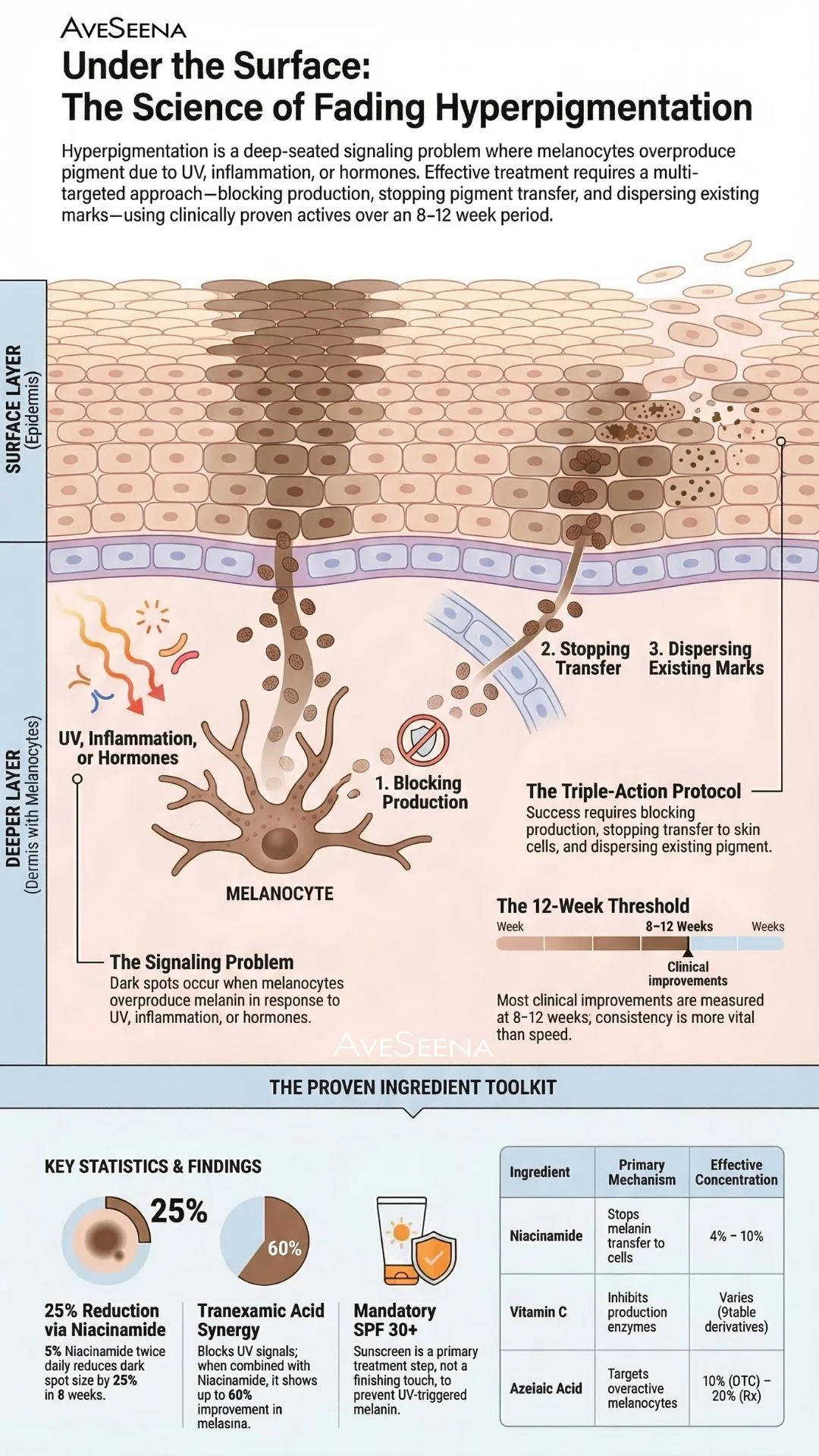
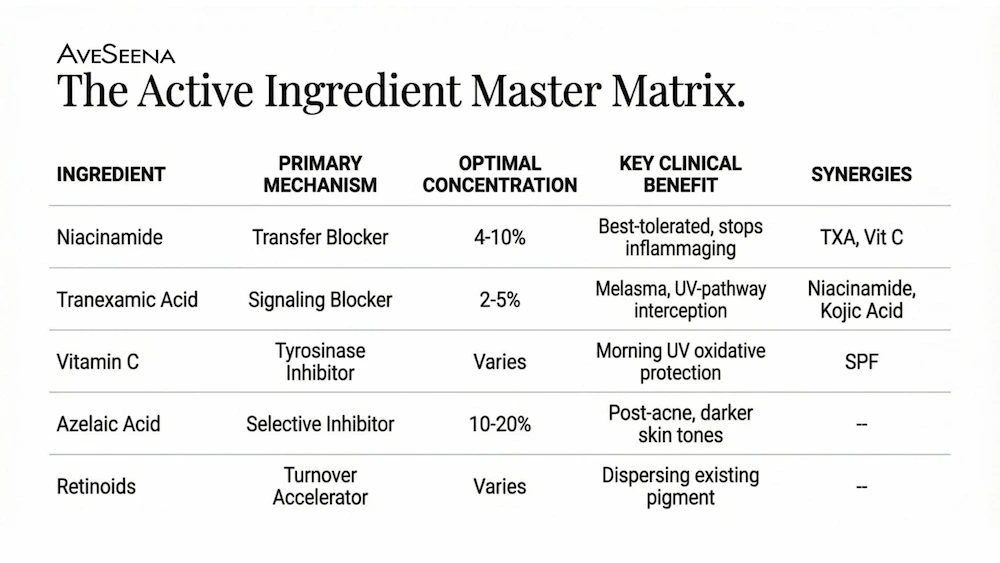
The products that help most with hyperpigmentation contain these ingredients: niacinamide, tranexamic acid, vitamin C, azelaic acid, retinoids and natural retinol-bakuchiol, and alpha hydroxy acids. These have the strongest clinical research behind them.
No product clears dark spots overnight. What works is a combination of proven ingredients, daily SPF, and 4 to 12 weeks of consistent use. Here is what the research actually shows.
Why Products That Help With Hyperpigmentation Need Multiple Ingredients
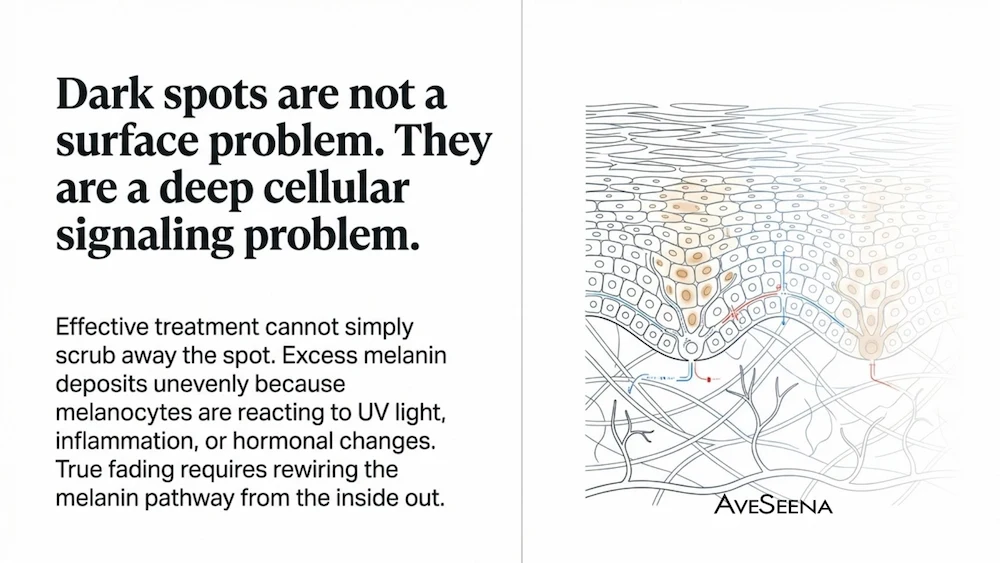
Dark spots are not a surface problem. They are a signaling problem inside the skin.
Melanin, the pigment that colors skin, is made in cells called melanocytes. UV light, inflammation, and hormonal changes overstimulate these cells. They produce too much melanin. That melanin deposits unevenly and creates dark spots.
Effective products need to work at multiple points. They need to block melanin production. They need to stop melanin from moving into skin cells. And they need to help disperse melanin that is already there.
Most single-ingredient products only target one step. That is why combination formulas outperform them in scientific studies.
Niacinamide (Vitamin B3): The Best-Tolerated Option
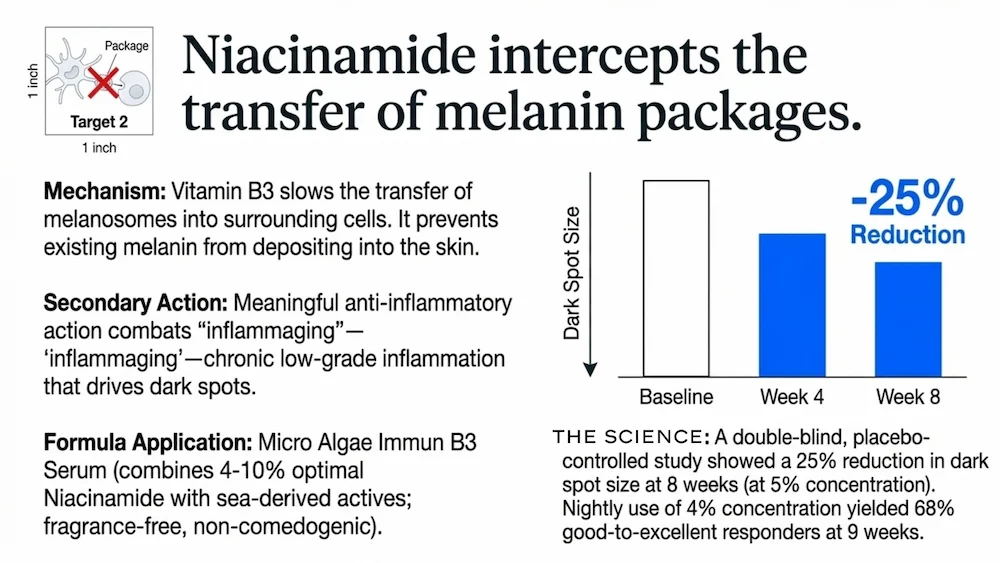
Niacinamide does not block melanin production directly. Instead, it slows the transfer of melanin packages, called melanosomes, into surrounding skin cells. This prevents existing melanin from depositing into the skin surface.
A double-blind, placebo-controlled study found that 5% niacinamide used twice daily reduced the appearance of dark spots by 25% in 8 weeks. A separate study using 4% niacinamide nightly showed significant improvement at 9 weeks. 68% of subjects were rated as good-to-excellent responders.
Niacinamide also helps the look of skin inflammation. This matters. Many dark spots are driven by chronic low-grade inflammation — a process called inflammaging.
Effective concentration: 4 to 10%. Compatible with most other actives.
Try it: The Micro Algae Immun B3 Serum combines niacinamide with sea-derived actives. It targets the appearance of dark spots, dullness, and uneven tone. Fragrance-free. Tested on sensitive skin.
Tranexamic Acid: The Ingredient Getting the Most Research Attention
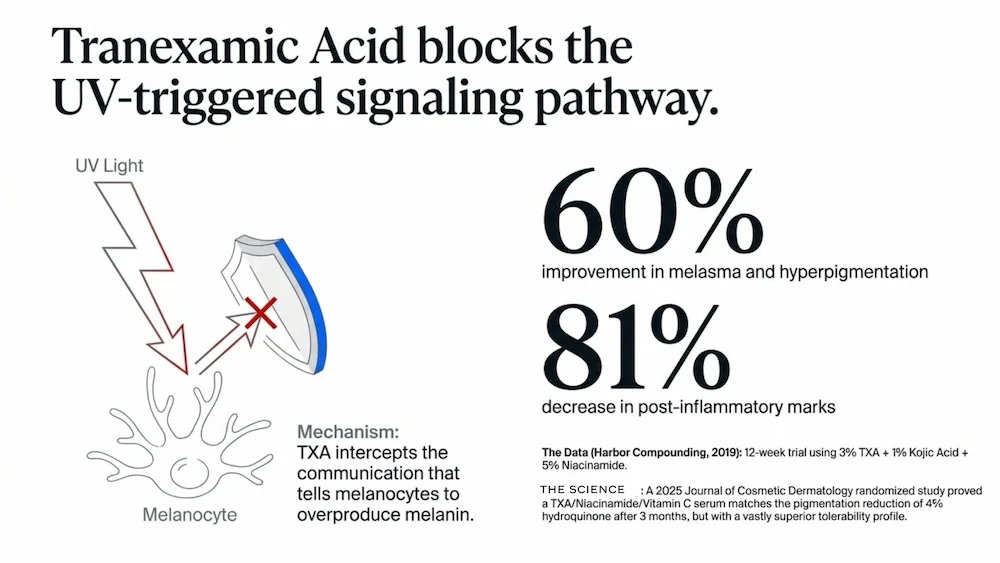
Tranexamic acid (TXA) blocks a UV-triggered pathway. This pathway tells melanocytes to overproduce melanin. By blocking it, TXA reduces both new spot formation and the appearance of existing pigmentation.
A 12-week trial on a serum with 3% TXA, 1% kojic acid, and 5% niacinamide showed an average 60% improvement in the appearance of hyperpigmentation. Post-inflammatory marks decreased by 81%. Skin tone improvement was visible at week 2.
A 2025 randomized study in the Journal of Cosmetic Dermatology compared a niacinamide + TXA + vitamin C serum against 4% hydroquinone. Both reduced the appearance of pigmentation significantly at 3 months (p < 0.001). The niacinamide/TXA/vitamin C serum had fewer side effects.
Effective concentration: 2 to 5% topically.
Vitamin C: Antioxidant and Melanin Blocker
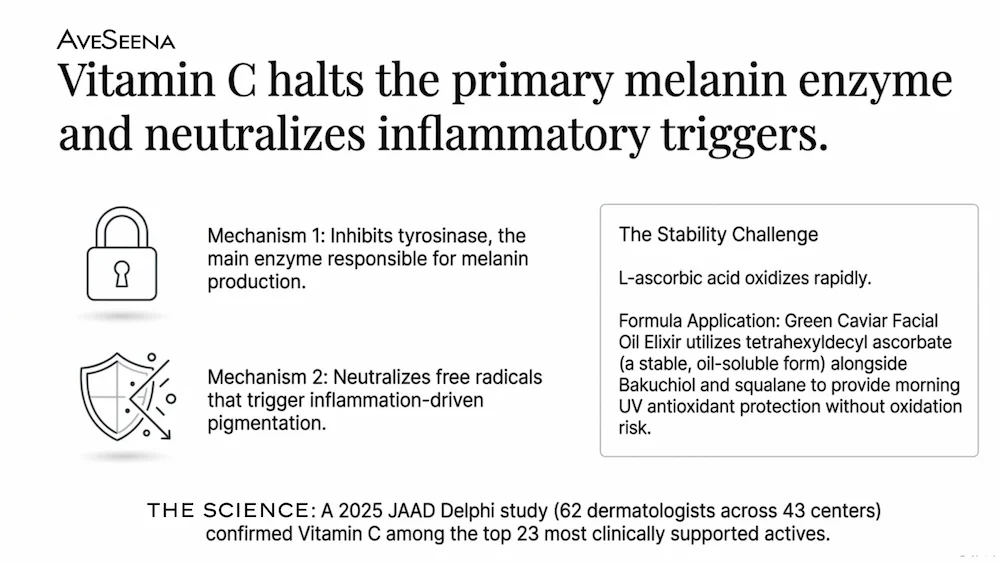
Vitamin C does two things for dark spots. It inhibits tyrosinase, the main enzyme that makes melanin. And it neutralizes free radicals that trigger inflammation-driven pigmentation.
The evidence is strongest for morning use under SPF. Vitamin C degrades in sunlight, so using it in the morning under sunscreen is both safer and more effective.
The challenge is stability. L-ascorbic acid is the most active form but it oxidizes fast. Stable derivatives like ascorbyl glucoside and tetrahexyldecyl ascorbate are easier to work with.
A 2025 Delphi consensus in JAAD, completed by 62 dermatologists at 43 centers, placed vitamin C among the top 23 clinically supported ingredients for the appearance of dark spots.
Try it: The Green Caviar Facial Oil Elixir contains tetrahexyldecyl ascorbate — a stable, oil-soluble form of Vitamin C — alongside Bakuchiol and squalane.
Azelaic Acid: Best for Darker Skin Tones
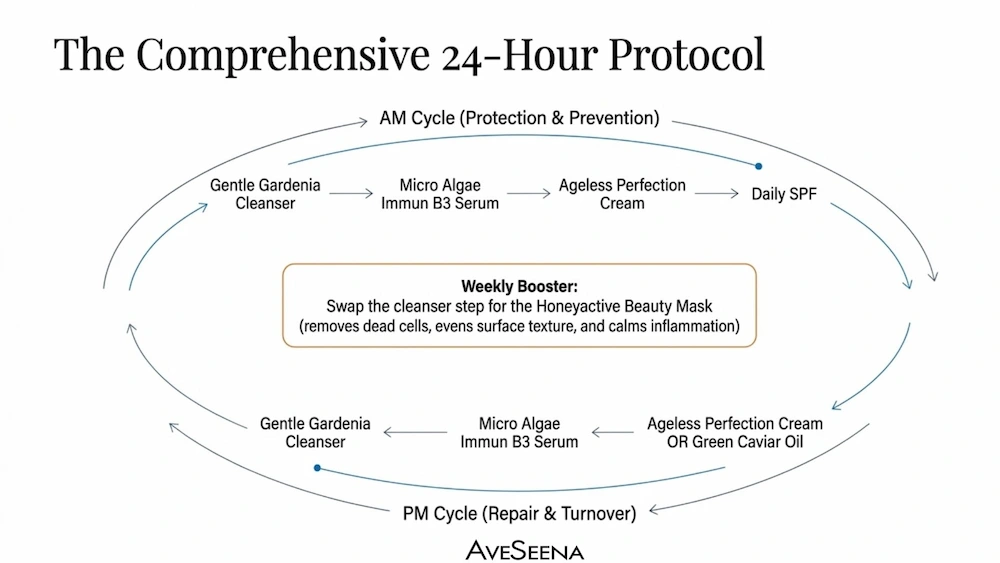
Azelaic acid targets only overactive melanocytes. It leaves normally pigmented cells alone. This makes it especially safe for medium to deep skin tones (Fitzpatrick III to VI), where pigmentation from inflammation is common.
It is also one of the few depigmenting actives considered safe during pregnancy.
Retinoids: For Dark Spots and Overall Skin Renewal
Retinoids are vitamin A derivatives. They speed up skin cell turnover. This disperses melanin already deposited in the skin and helps reduce new melanin production.
They are the most-studied topical class for the appearance of aging overall. Prescription tretinoin works faster than over-the-counter retinol. Both require slow introduction to avoid irritation.
Important note: irritation from retinoids can trigger post-inflammatory marks in pigmentation-prone skin. Start slowly. Build up over weeks.
Daily SPF: Part of the Treatment, Not Just Protection
No product that helps with the appearance of hyperpigmentation will work without daily SPF 30+. UV is the main trigger for melanin overproduction. A brightening serum at night means nothing if UV is restimulating melanocytes every morning.
Track your coverage with the UVShield Facial Analyzer System. It reveals where UV reaches your skin in real time. It shows missed spots when you apply sunscreen.
A Simple Hyperpigmentation Routine Using AveSeena Products
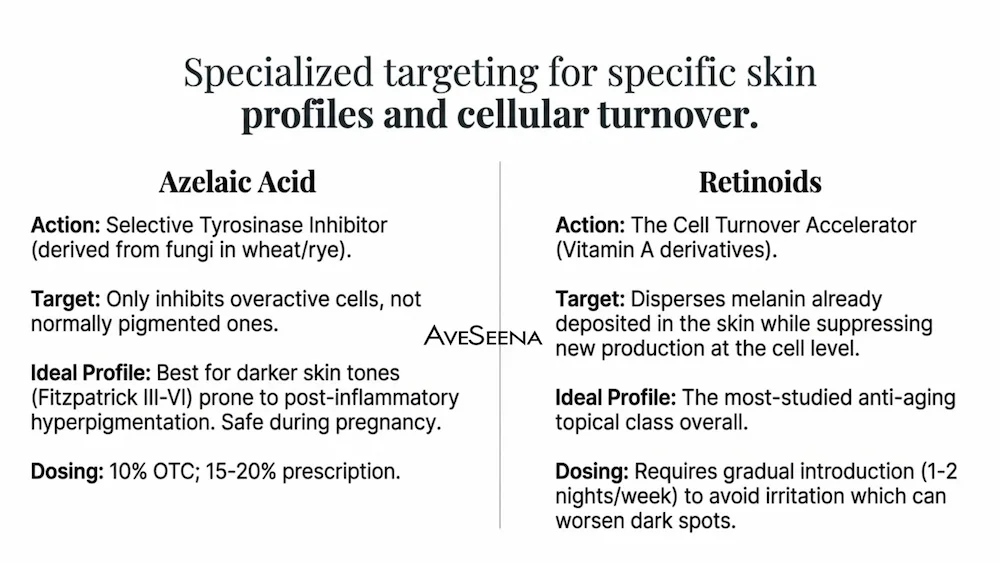
Morning: Gentle Gardenia Cleanser → Micro Algae Immun B3 Serum → Ageless Perfection Cream → SPF
Evening: Same cleanser and serum → Ageless Perfection Cream or Green Caviar Facial Oil Elixir
Weekly: Replace your cleanser step once a week with the Honeyactive Beauty Mask. It helps the look of dull skin cells and calm the visible signs of inflammaging.
Start with the serum built around niacinamide — one of the most-studied actives for the look of dark spots, dermatologist-tested, and tested on sensitive skin.
Shop Micro Algae Immun B3 Serum Shop Green Caviar OilHyperpigmentation Products: Quick Facts
- Top clinically supported actives: Niacinamide, tranexamic acid, vitamin C, azelaic acid, retinoids, AHAs
- Niacinamide effective concentration: 4–10%; inhibits melanosome transfer to keratinocytes
- Niacinamide 5% result: 25% reduction in dark spot size at 8 weeks (double-blind RCT)
- TXA + kojic acid + niacinamide (12 weeks): 60% improvement in hyperpigmentation; 81% reduction in PIH
- TXA + niacinamide + vitamin C vs. HQ 4%: Comparable efficacy at 3 months with better tolerability (J Cosmet Dermatol, 2025)
- Tranexamic acid effective concentration: 2–5% topically
- Vitamin C mechanism: Tyrosinase inhibition + free radical neutralization
- Minimum treatment timeline: 8–12 weeks; most clinical trials measured at 12 weeks
- Non-negotiable co-treatment: Daily broad-spectrum SPF 30+ — UV triggers new melanin daily
- Dermatologist consensus source: JAAD Delphi study, 2025 — 62 dermatologists, 43 centers
Scientific References
1. Hakozaki T, Minwalla L, Zhuang J, et al. The effect of niacinamide on reducing cutaneous pigmentation and suppression of melanosome transfer. British Journal of Dermatology. 2002;147(1):20–31. PubMed
2. Bissett DL, Miyamoto K, Sun P, Li J, Berge CA. Topical niacinamide reduces yellowing, wrinkling, red blotchiness, and hyperpigmented spots in aging facial skin. International Journal of Cosmetic Science. 2004;26(5):231–238. PubMed
3. Desai S, Ayres E, Bak H, et al. Effect of a tranexamic acid, kojic acid, and niacinamide containing serum on facial dyschromia: a clinical evaluation. Journal of Drugs in Dermatology. 2019;18(5):454–459.
4. Rocio J, Pittet JC, Sachdev M, et al. Evaluation of the efficacy of a serum containing niacinamide, tranexamic acid, vitamin C, and hydroxy acid compared to 4% hydroquinone in the management of melasma. Journal of Cosmetic Dermatology. 2025;24(3):e70097. PubMed
5. Jafry H, et al. A practical guide to over-the-counter treatments for hyperpigmentation. JEADV Clinical Practice. 2024.
6. Boo YC. Mechanistic basis and clinical evidence for the applications of nicotinamide (niacinamide) to control skin aging and pigmentation. Antioxidants. 2021;10(8):1315. PubMed
7. Kim EJ, Kim JY, et al. Skincare ingredients recommended by cosmetic dermatologists: a Delphi consensus study. Journal of the American Academy of Dermatology. 2025.
8. Rodan K, Fields K, Majewski G, Falla T. Skincare bootcamp: the evolving role of skincare. Plastic and Reconstructive Surgery — Global Open. 2016;4(12 Suppl):e1152.
The content on this page is for educational and informational purposes only. It is not intended as medical advice and does not replace consultation with a qualified healthcare provider, dermatologist, or physician. While we present information to the best of our ability and reference peer-reviewed scientific literature, individual skin concerns, conditions, and responses to ingredients vary. Individual results may vary.
Published: March 18, 2026 | Last Updated: April 23, 2026 | Reviewed by Dr. Ebru Karpuzoglu, Immunologist