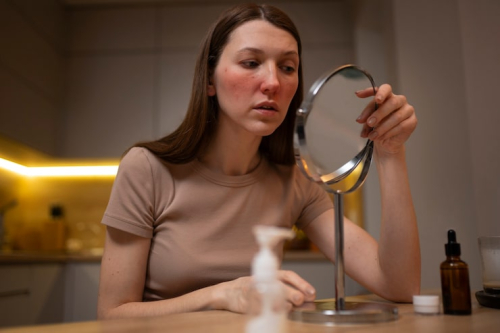
Skin redness, or erythema, has long been viewed primarily as a fleeting cosmetic issue. Today, however, dermatologists increasingly recognize it as a complex medical concern that demands deeper attention. Persistent facial redness affects daily comfort, self-confidence, and overall well-being, prompting a shift in how skincare professionals and patients approach treatment.
Sensitive, aging skin often shows the effects of hidden inflammation: dullness, redness, reactivity, and a weakened barrier. Daily stress, pollution, and harsh products can intensify irritation, making skin feel fragile and look older faster. Take Skin Quiz to find the right support for your skin. AveSeena’s immunology-driven formulas, developed by Dr. Ebru Karpuzoglu with 30 years of expertise, help calm visible signs of inflammation, strengthen the skin barrier, and restore a healthier, more resilient glow. Shop Now!
Understanding the Biological Foundations of Persistent Redness
Chronic skin redness often stems from intricate interactions between immune responses and vascular changes in the skin. Hyper-reactive blood vessels combined with ongoing inflammatory processes can sustain visible redness far beyond temporary irritation. Factors such as oxidative stress, neurovascular signaling, and immune dysregulation play key roles in both the development and persistence of erythema.
Recent research has emphasized that persistent skin redness often results from intricate interactions between immune responses and vascular changes in the skin. Chronic erythema can stem from hyper-reactive blood vessels and inflammatory processes that sustain visible redness, making it more than a temporary cosmetic concern. Studies indicate that oxidative stress, neurovascular signaling, and immune dysregulation all contribute to the development and exacerbation of skin redness. These mechanisms help explain why certain individuals are more prone to prolonged redness and why treatments targeting only surface symptoms may be insufficient. Recognizing the biological underpinnings of chronic erythema is essential for dermatologists to design comprehensive treatment plans that address both inflammation and vascular reactivity. This perspective reinforces the importance of skin redness as a central dermatological concern, illustrating that effective management requires integrating insights from immunology, dermatopathology, and patient-specific factors to improve outcomes and quality of life. For more details, see the study on immune and vascular mechanisms in skin redness.
These underlying mechanisms explain why some individuals experience prolonged redness while others recover quickly from similar triggers. Surface-level treatments that only address visible symptoms frequently fall short because they overlook the deeper biological drivers. Effective management requires strategies that target both inflammation and vascular reactivity, integrating insights from immunology and dermatopathology for more comprehensive results.
For patients in bustling cities like New York or Los Angeles, where environmental stressors such as pollution and varying climates compound skin sensitivity, recognizing these biological underpinnings becomes particularly relevant. Dermatologists now prioritize personalized approaches that consider individual triggers and skin barrier health rather than one-size-fits-all solutions.
The Psychological and Social Toll of Visible Redness
Beyond the physical symptoms, persistent facial redness carries significant emotional weight. Individuals often report heightened self-consciousness, anxiety in social situations, and reduced quality of life stemming from the visibility of their condition. These effects can contribute to impaired self-esteem and, in some cases, depressive symptoms.
Persistent facial redness has profound psychological and social consequences, including heightened self-consciousness, anxiety, and reduced social interactions. Studies show that individuals with chronic erythema often report decreased quality of life, impaired self-esteem, and even depressive symptoms due to the visibility of their condition. These effects underscore why dermatologists increasingly view redness not merely as a cosmetic concern but as a complex medical issue with emotional and psychosocial dimensions. Addressing the psychological impacts of persistent erythema requires integrated care approaches, including patient education, stress management strategies, and supportive therapies alongside medical treatments. Highlighting these mental health implications emphasizes the urgency of recognizing skin redness as a central focus in dermatology, where treatment success is measured not only by symptom reduction but also by improvements in overall well-being and patient confidence. Learn more about the psychological impacts of persistent erythema.
What was once dismissed as a minor cosmetic inconvenience is now understood as a condition with real psychosocial dimensions. Patients describe avoiding photographs, limiting social engagements, or feeling compelled to apply heavy makeup to conceal redness behaviors that impact personal and professional interactions alike.
In vibrant communities across Miami, Chicago, and San Francisco, where appearance and first impressions influence networking and social connections, addressing these psychological impacts matters deeply. Integrated care that combines medical treatment with patient education and stress management strategies helps restore not only clearer skin but also greater confidence and emotional well-being.
Why Redness Is Gaining Prominence in Dermatology
Several converging factors have elevated skin redness to a central position in dermatological practice. Greater public awareness, driven by social media and educational content, has encouraged more people to seek professional help rather than self-managing with over-the-counter products. Simultaneously, advances in diagnostic tools allow clinicians to identify subtle vascular and inflammatory patterns that previously went unnoticed.
Modern lifestyles also play a role. Exposure to environmental aggressors, dietary influences, and stress all common in dynamic urban centers like Boston, Seattle, and Houston can exacerbate vascular reactivity. As patients become more informed consumers, they demand solutions that deliver lasting results rather than temporary coverage.
Dermatology practices are responding by developing protocols that view redness within the broader context of skin health. This holistic perspective recognizes connections between erythema and conditions such as rosacea, sensitivity, and barrier dysfunction, leading to more effective, multi-faceted treatment plans.
Common Triggers and Modern Management Approaches
Understanding common triggers represents a crucial step toward better management. Environmental factors, temperature fluctuations, spicy foods, alcohol, and certain skincare ingredients can all provoke flares in susceptible individuals. Identifying personal triggers through careful observation and professional guidance enables more proactive control.
Contemporary approaches emphasize strengthening the skin barrier, calming inflammation, and supporting vascular stability. Gentle, science-backed formulations that avoid harsh irritants have gained favor among both patients and practitioners. Many individuals benefit from routines that incorporate antioxidants, soothing botanicals, and ingredients specifically chosen for reactive skin.
For busy professionals in cities like Dallas, Atlanta, and Washington DC, convenient yet effective regimens prove especially valuable. The goal shifts from concealment to genuine improvement, helping people face their days with greater comfort and assurance.
The Role of Innovation in Addressing Erythema
Technological and formulation innovations continue to expand options for managing skin redness. Non-invasive treatments, targeted topicals, and personalized skincare solutions allow for more precise intervention. Practices increasingly combine in-office procedures with at-home care to achieve optimal outcomes.
Patient education remains essential. When individuals understand the science behind their symptoms, they become active partners in their care journey. This collaborative approach yields better adherence to recommended protocols and more satisfying long-term results.
Brands committed to evidence-based skincare, such as those focusing on advanced formulations for sensitive and redness-prone skin, contribute meaningfully to this evolving landscape by offering products that respect the skin’s natural biology while delivering visible improvements.
Practical Steps for Those Experiencing Persistent Redness
Individuals noticing ongoing redness can take several constructive steps. Consulting a board-certified dermatologist provides expert evaluation and tailored recommendations. Keeping a symptom journal helps identify patterns and potential triggers. Adopting a minimalist skincare routine with gentle, fragrance-free products often yields positive changes.
Lifestyle adjustments, including stress management techniques, consistent sun protection, and attention to diet, complement topical care. Patience proves important, as meaningful improvements in chronic erythema typically develop gradually through consistent, appropriate intervention.
Communities in areas like Scottsdale, Nashville, and Palm Beach increasingly value wellness-oriented approaches that address both visible concerns and underlying factors. This mindset supports more sustainable skin health strategies.
Redness Management
As dermatological understanding deepens, the field moves toward even more refined, patient-centered solutions. Greater emphasis on prevention, early intervention, and personalized care promises better outcomes for those affected by persistent redness. The growing recognition of its medical and emotional significance ensures continued innovation and improved support for patients.
Skin redness, once marginalized as purely cosmetic, now occupies a well-deserved place among priority dermatological concerns. By addressing its biological roots, psychological effects, and practical management, both clinicians and individuals can achieve clearer, more comfortable skin and enhanced quality of life.
Those navigating redness-related challenges deserve approaches grounded in science and empathy. With ongoing advancements and informed care, lasting improvement remains an achievable goal for many.
Frequently Asked Questions
What causes persistent skin redness that won’t go away?
Persistent skin redness (erythema) is typically caused by a combination of hyper-reactive blood vessels, chronic inflammation, oxidative stress, neurovascular signaling, and immune dysregulation not just surface-level irritation. Common triggers include environmental stressors, temperature changes, spicy foods, alcohol, and certain skincare ingredients. Because multiple biological systems are involved, treatments that only address visible symptoms often fall short. A board-certified dermatologist can help identify personal triggers and design a plan targeting both inflammation and vascular reactivity.
Can facial redness affect mental health and quality of life?
Yes chronic facial redness carries significant psychological and social consequences beyond the physical symptoms. People with persistent erythema frequently report heightened self-consciousness, social anxiety, reduced self-esteem, and in some cases depressive symptoms. Many avoid photos, limit social interactions, or rely on heavy makeup to conceal redness, impacting both personal and professional life. Effective treatment now incorporates patient education, stress management, and supportive therapies alongside medical care to address these psychosocial dimensions.
What are the best treatments and skincare routines for redness-prone skin?
Modern management of skin redness focuses on strengthening the skin barrier, calming inflammation, and stabilizing vascular reactivity rather than simply concealing symptoms. Dermatologists recommend gentle, fragrance-free formulations that include antioxidants and soothing botanicals while avoiding harsh irritants. Lifestyle adjustments consistent sun protection, stress management, and dietary awareness complement topical care. For best results, consult a dermatologist for a personalized protocol, as chronic erythema typically improves gradually through consistent, targeted intervention.
Disclaimer: The above helpful resources content contains personal opinions and experiences. The information provided is for general knowledge and does not constitute professional advice.
You may also be interested in: AveSeena Ingredients: Effective Skincare for Visible Results
Sensitive, aging skin often shows the effects of hidden inflammation: dullness, redness, reactivity, and a weakened barrier. Daily stress, pollution, and harsh products can intensify irritation, making skin feel fragile and look older faster. Take Skin Quiz to find the right support for your skin. AveSeena’s immunology-driven formulas, developed by Dr. Ebru Karpuzoglu with 30 years of expertise, help calm visible signs of inflammation, strengthen the skin barrier, and restore a healthier, more resilient glow. Shop Now!
Powered by flareAI.co